· made 2016–17
Weaving Hexagons
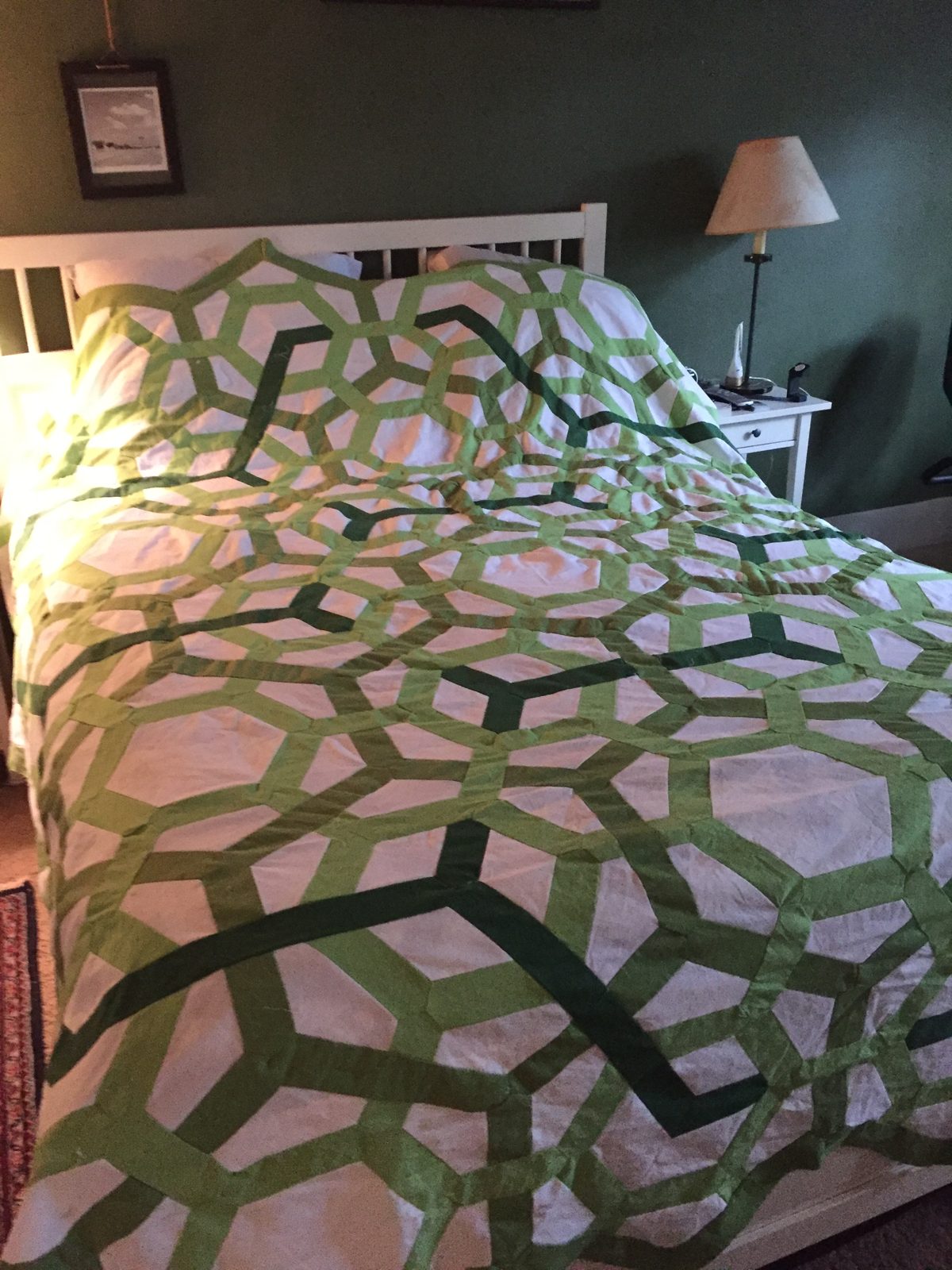
One king-size quilt with two sides: green on one, blue on the other, and every line matching.
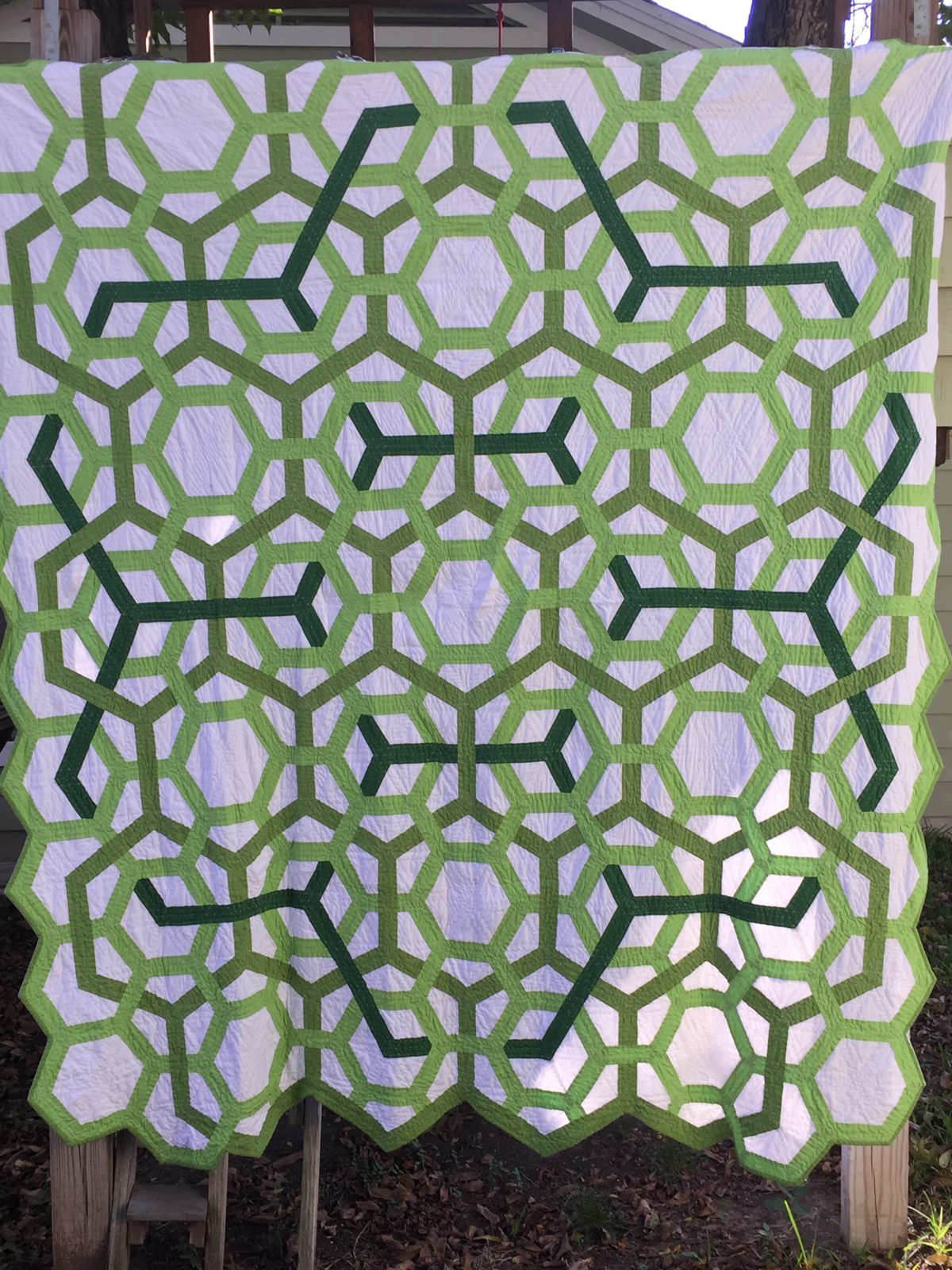
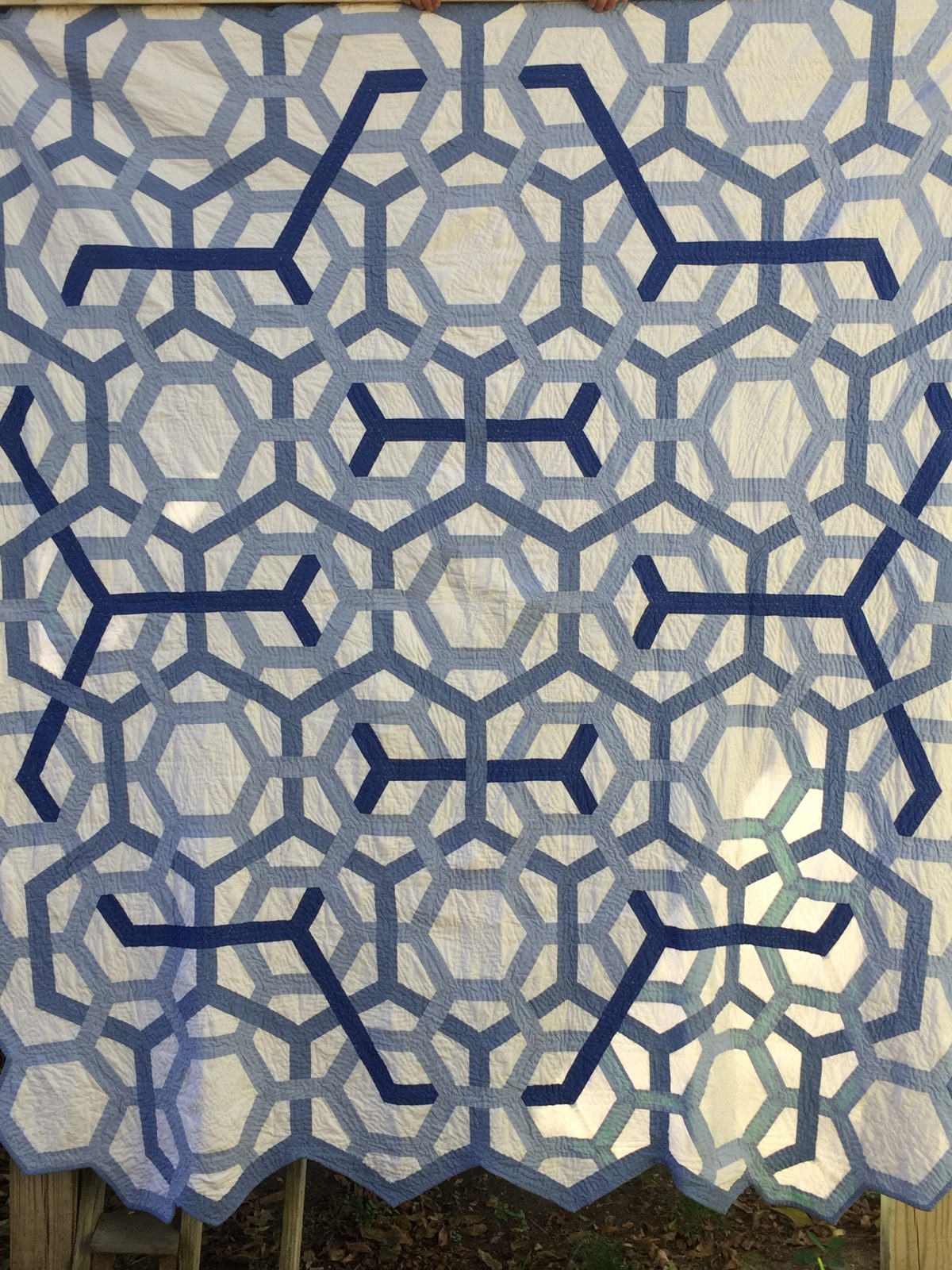
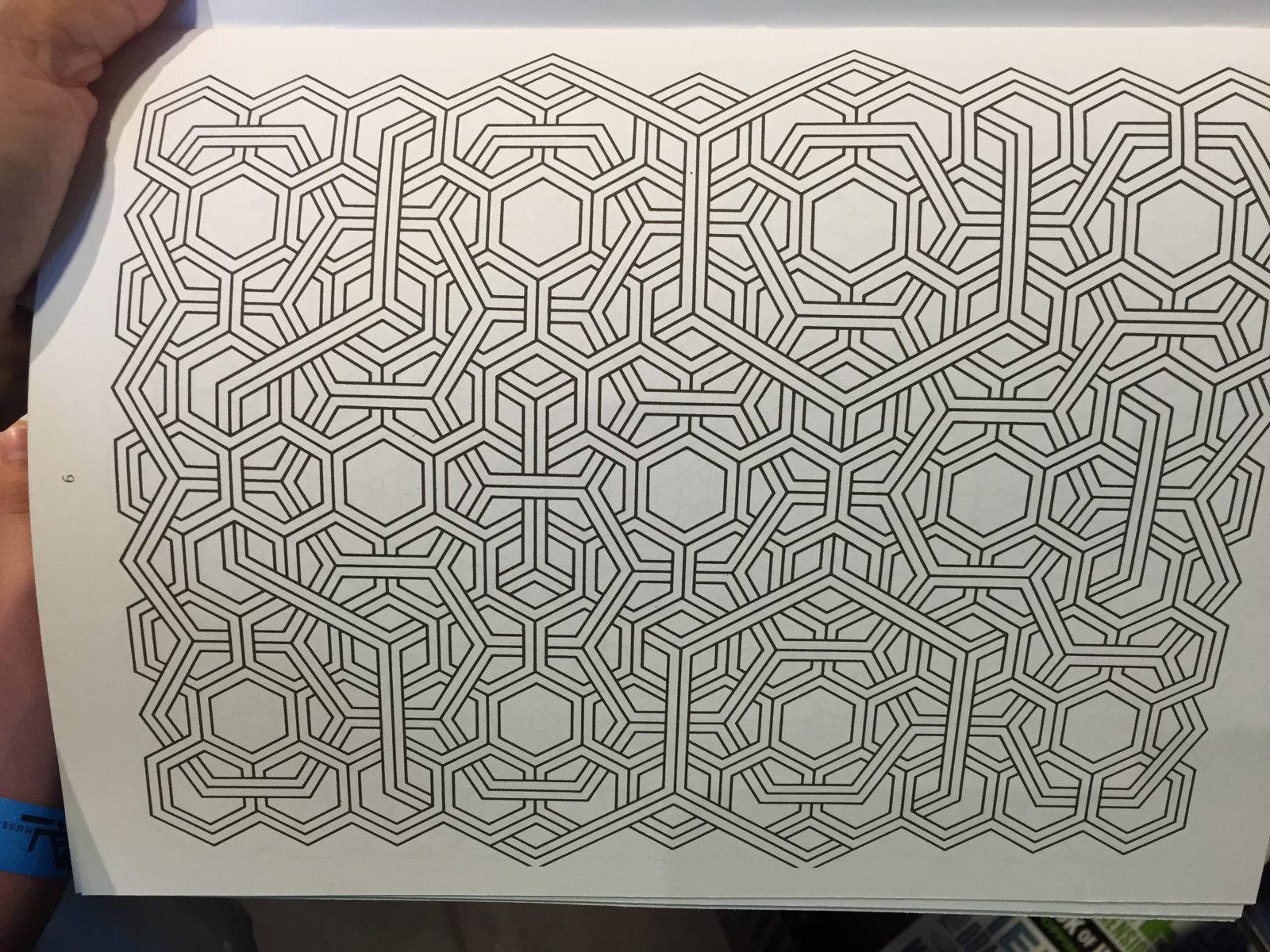
This design started in a colouring book I saw at a museum: a page of hexagons made of strips that seem to weave over and under each other.
The math
Every strip in this pattern runs in one of just three directions, 60° apart. That's what a hexagon grid is made of, and it's why the strips can cross and branch so neatly.
Hexagons have a claim to fame. If you want to divide a flat surface into pieces that all have the same area, and use as little edge as possible doing it, the hexagon wins. Here are three shapes with exactly the same area:
Of the three regular shapes that tile, the hexagon needs the least edge to enclose the same space, and it gets closest to a circle (which would need 3.54, but circles leave gaps). Bees seem to have worked this out: wax is expensive to make, and a honeycomb uses as little of it as possible. People suspected that hexagons were the best possible way to do this, against any shapes at all, since Roman times. Thomas Hales finally proved it in 1999.
Two sides
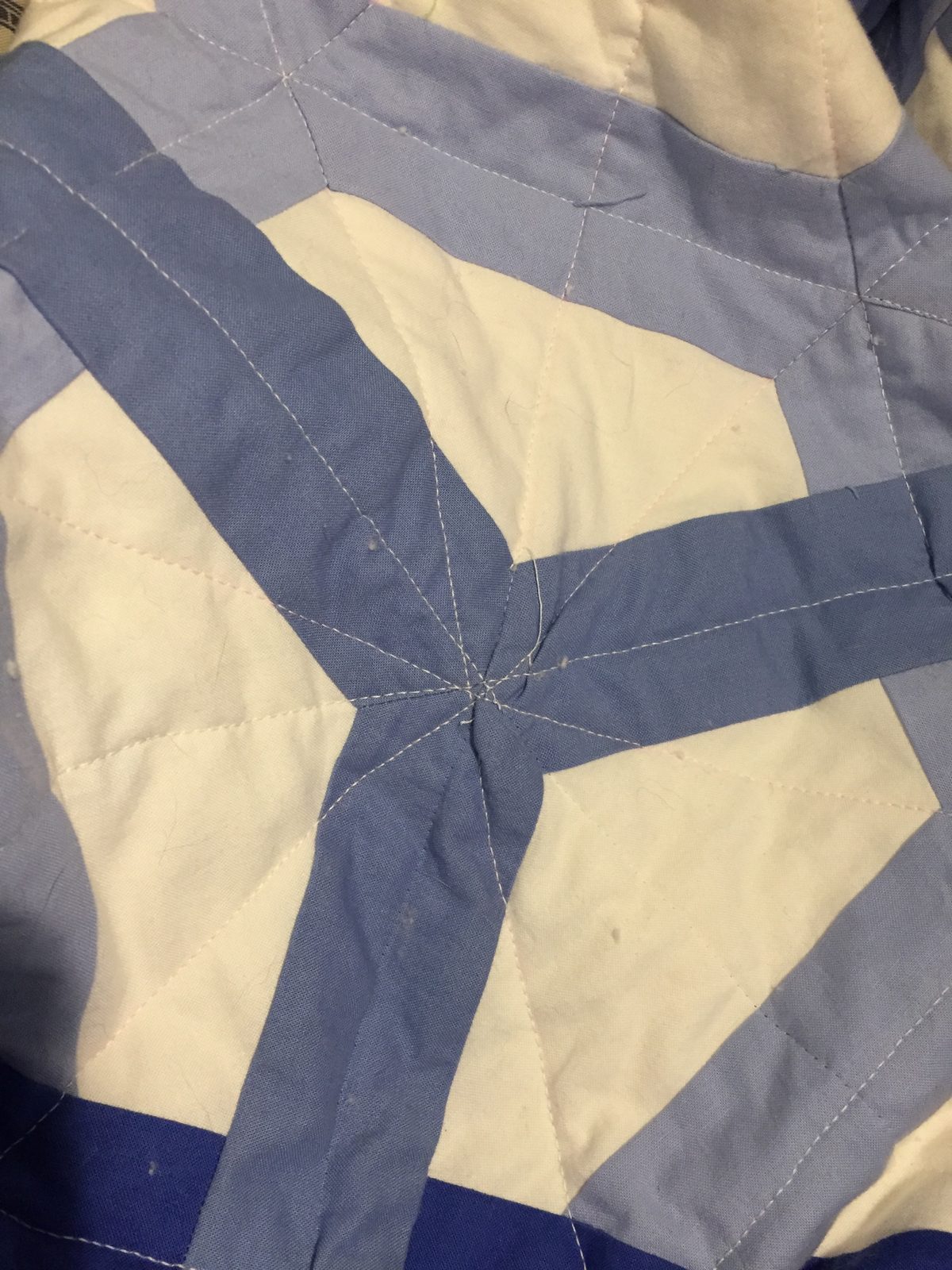
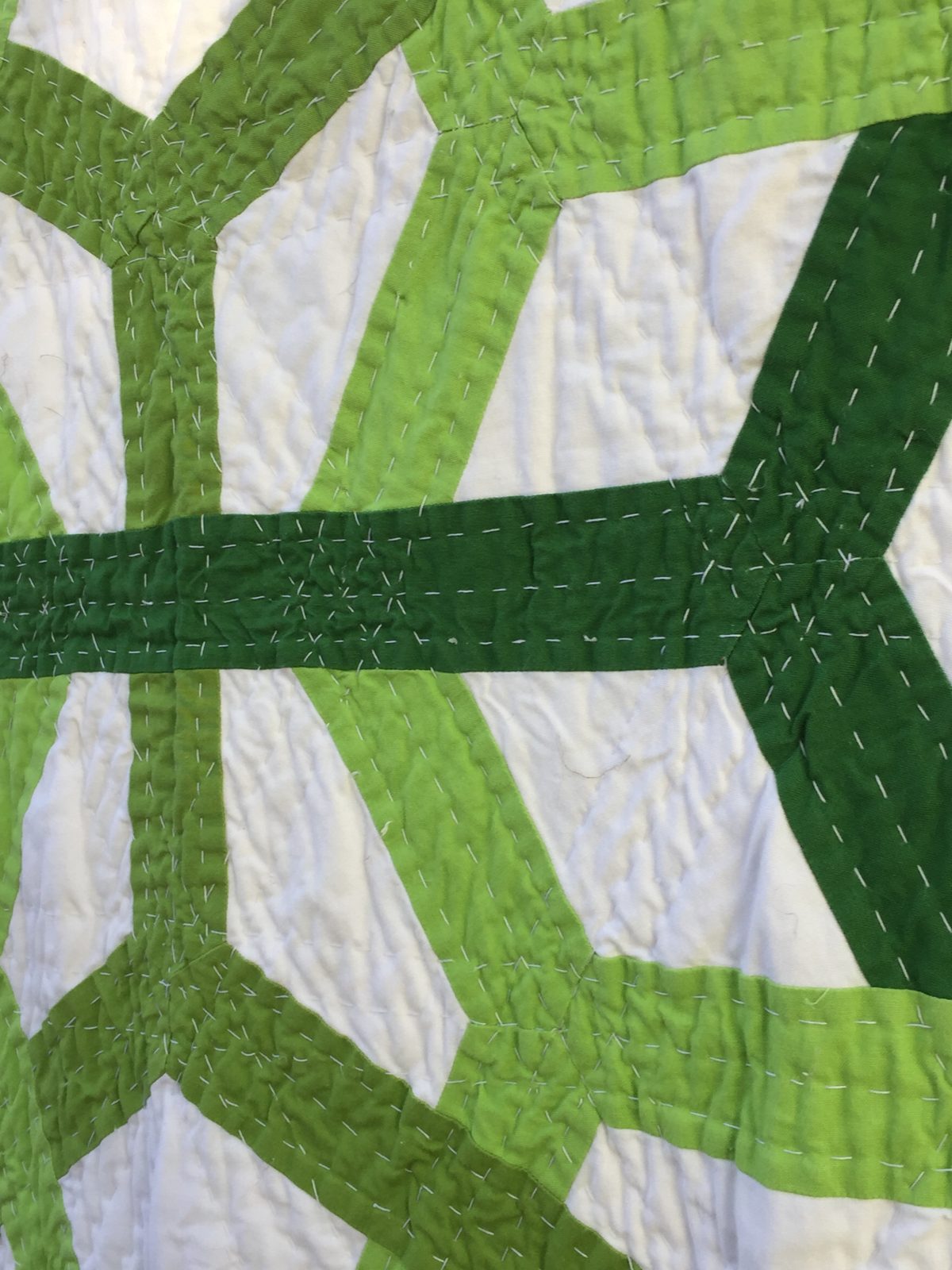
This is a double-sided quilt: the colours line up and the quilting matches on both sides. The colours were chosen to coordinate, but my husband got to pick the greens, while I chose the blues.
Quilting by hand
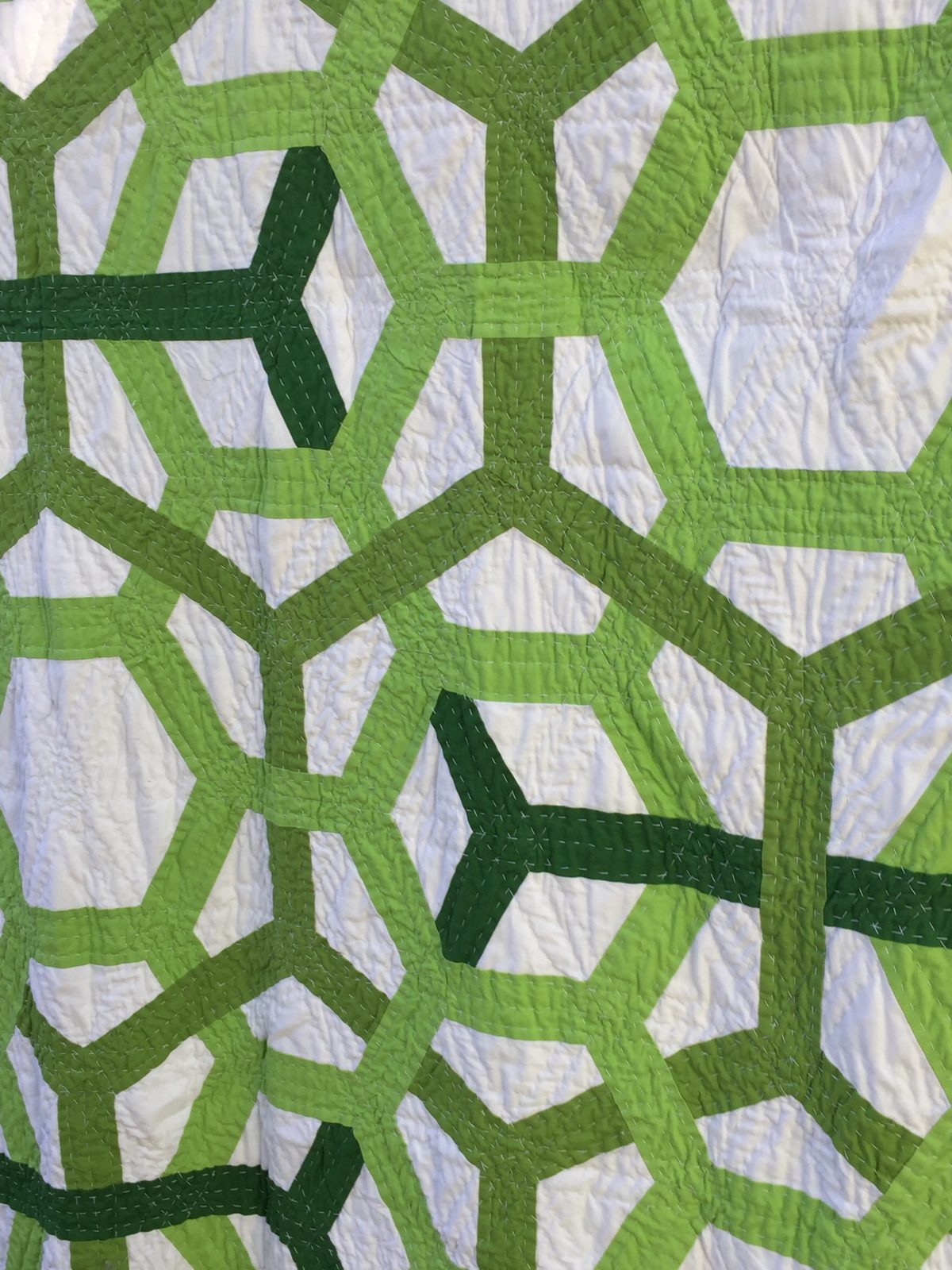
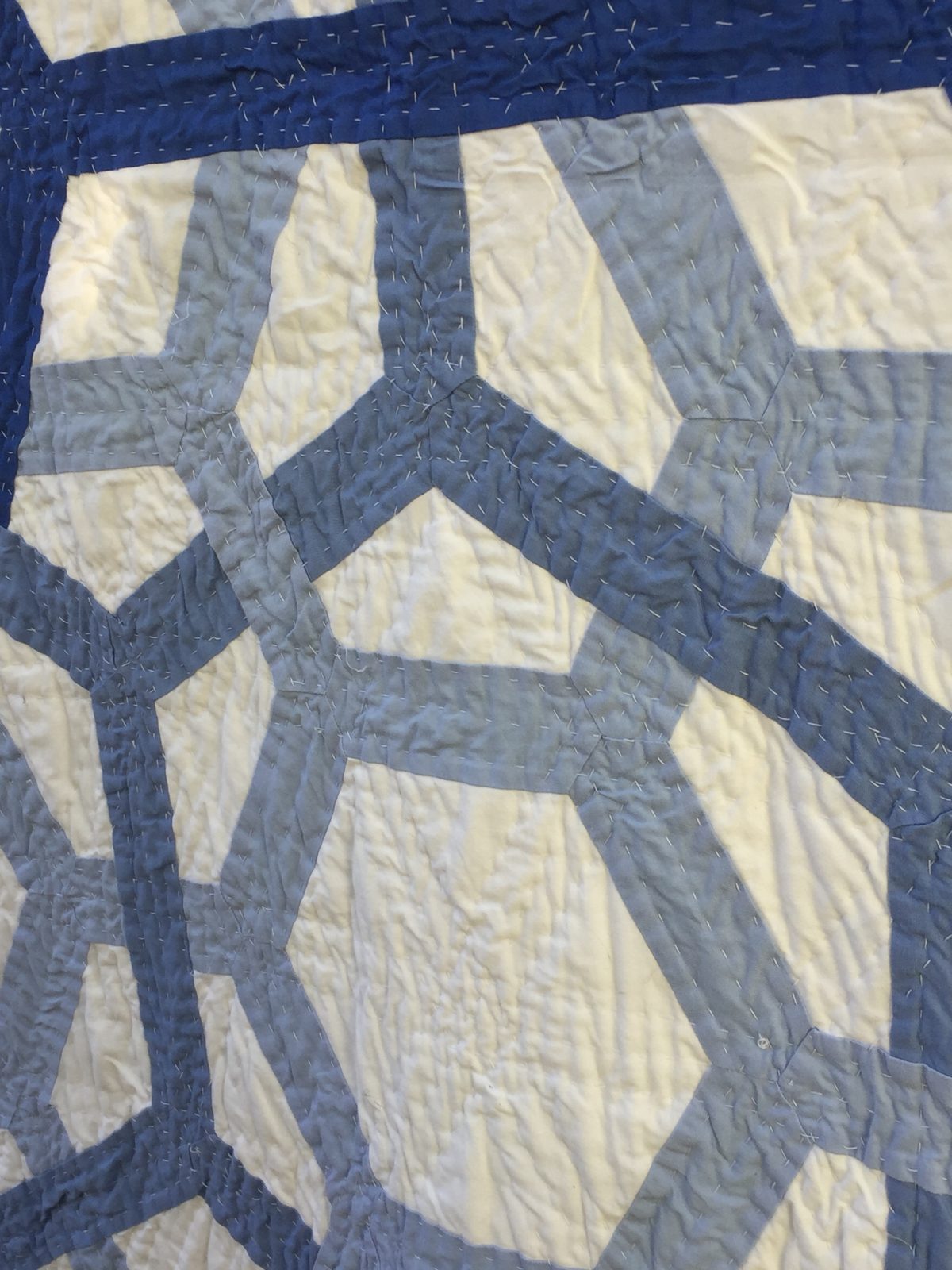
It's 100% hand quilted. The hardest part was the quilting: making sure everything lined up, so the stitching follows the pattern on both sides at once.
The binding was hard too: instead of a straight edge, it follows the contour of the hexagons all the way around the outside.
It's a king-size quilt.
Sources: Wikipedia: Honeycomb theorem, Hales, The Honeycomb Conjecture (1999).