· made in 2016
Tiling Pentagons
Fifteen pentagons that tile the plane, and one that doesn't.
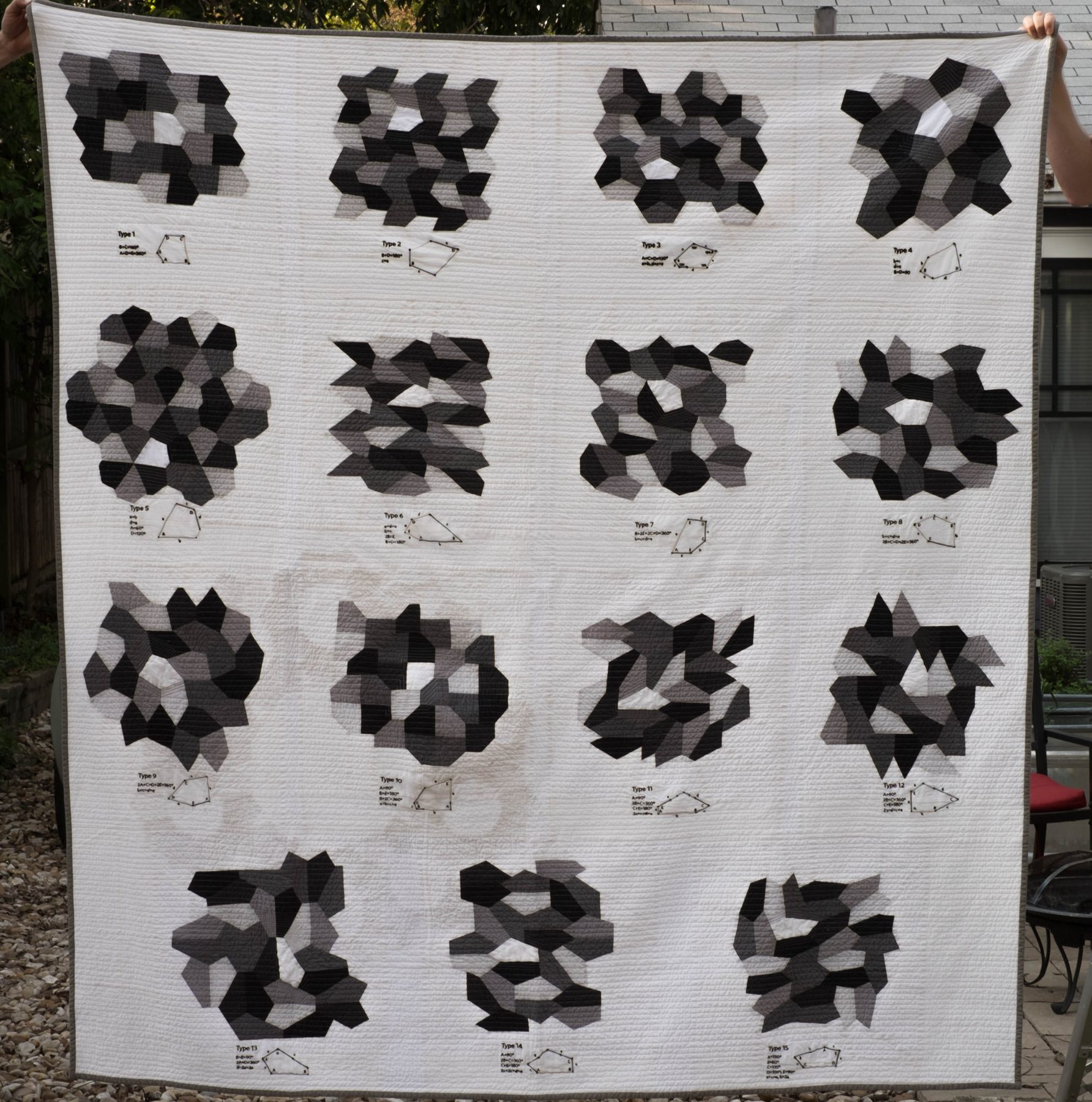
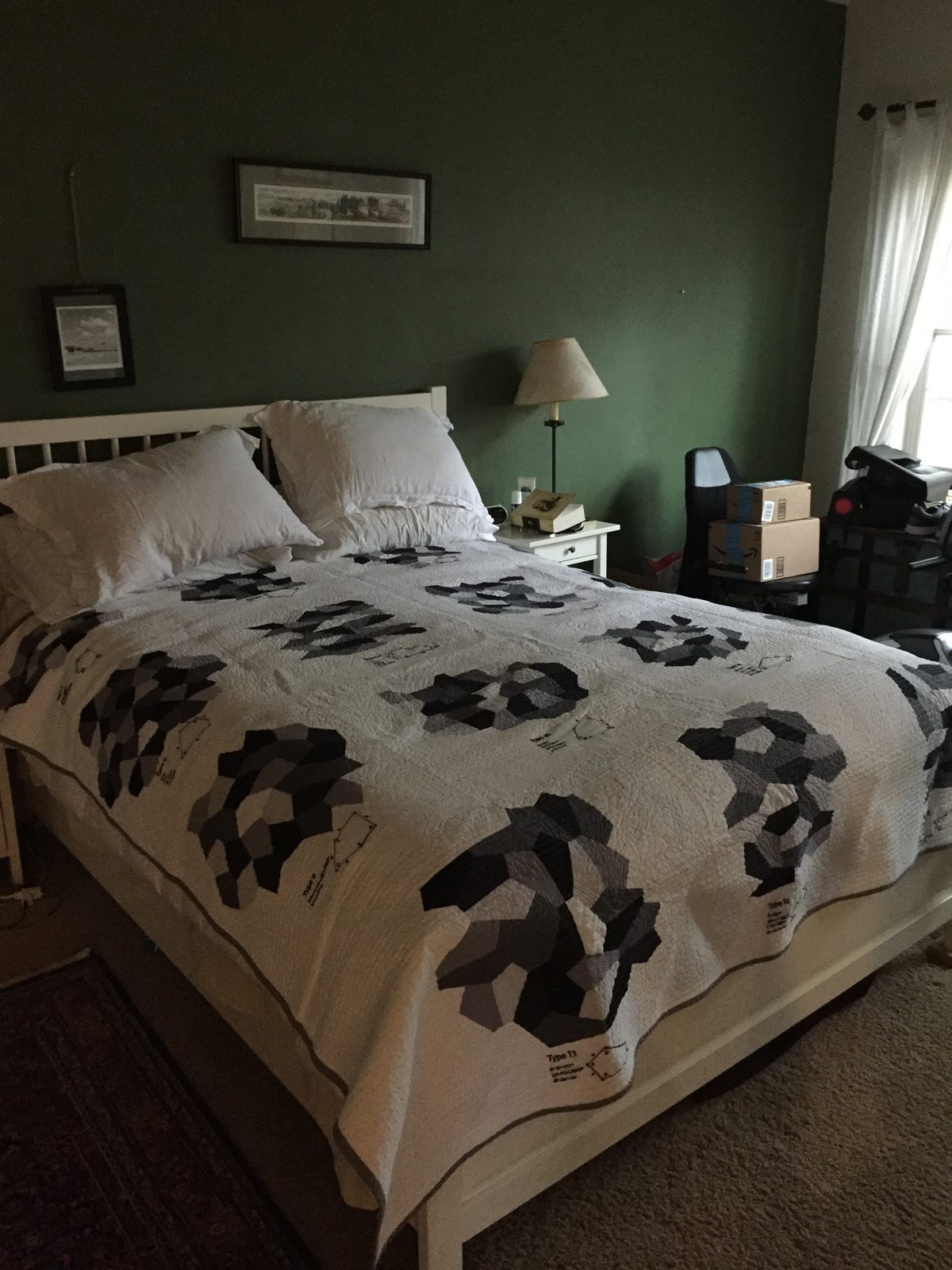
In 2015 the news came out that mathematicians had discovered a new pentagon that tiles the plane, the first new one in thirty years. That was the inspiration for this quilt. I sewed all fifteen known types, then used embroidery to write out the rules for each one.
Why pentagons are tricky
Squares, triangles and hexagons all fit together with no gaps, which is why they show up in so many quilts. The regular pentagon, the one with five equal sides, doesn't. Each of its corners is 108°, and the corners meeting at a point have to add up to 360°. Three pentagons leave a gap. Four overlap.
But if you're allowed to stretch the sides and angles, some pentagons do tile. The question of exactly which ones took a century:
- 1918: Karl Reinhardt found the first five types.
- 1968: Richard Kershner found three more and said that was all of them.
- 1975: Martin Gardner wrote about it in Scientific American, and readers started finding more. Richard James found one.
- 1976–77: Marjorie Rice, a San Diego homemaker whose math education ended in high school, found four more.
- 1985: Rolf Stein found a fourteenth.
- 2015: Casey Mann, Jennifer McLoud-Mann and David Von Derau found the fifteenth with a computer search.
- 2017: Michaël Rao proved there are no others. Fifteen is the whole list.
The front: all fifteen
Each block is one type, sewn from grey solids, with its rules embroidered underneath: which angles and sides have to match for that shape to tile. Tap any block to see it bigger.


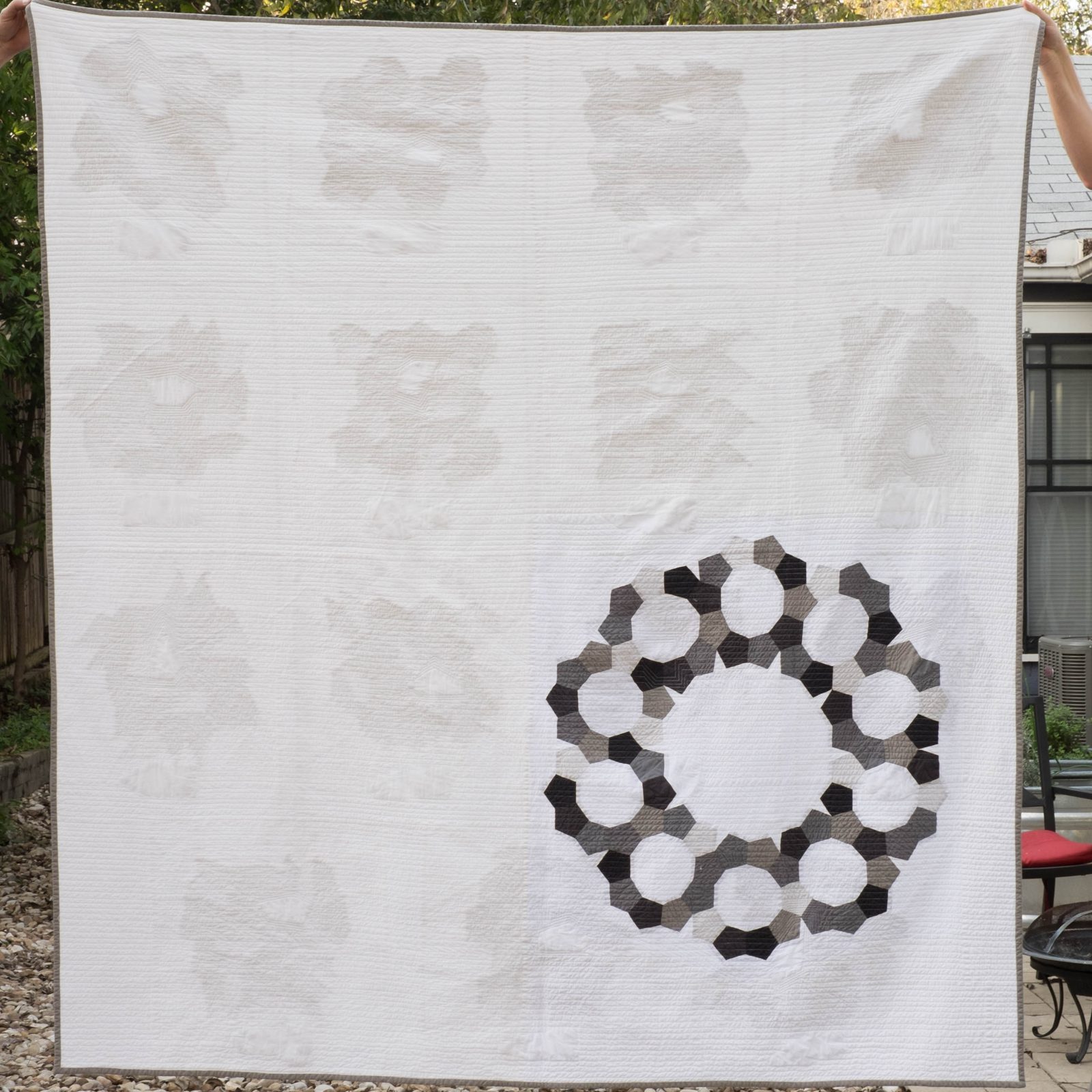
The back: the one that doesn't
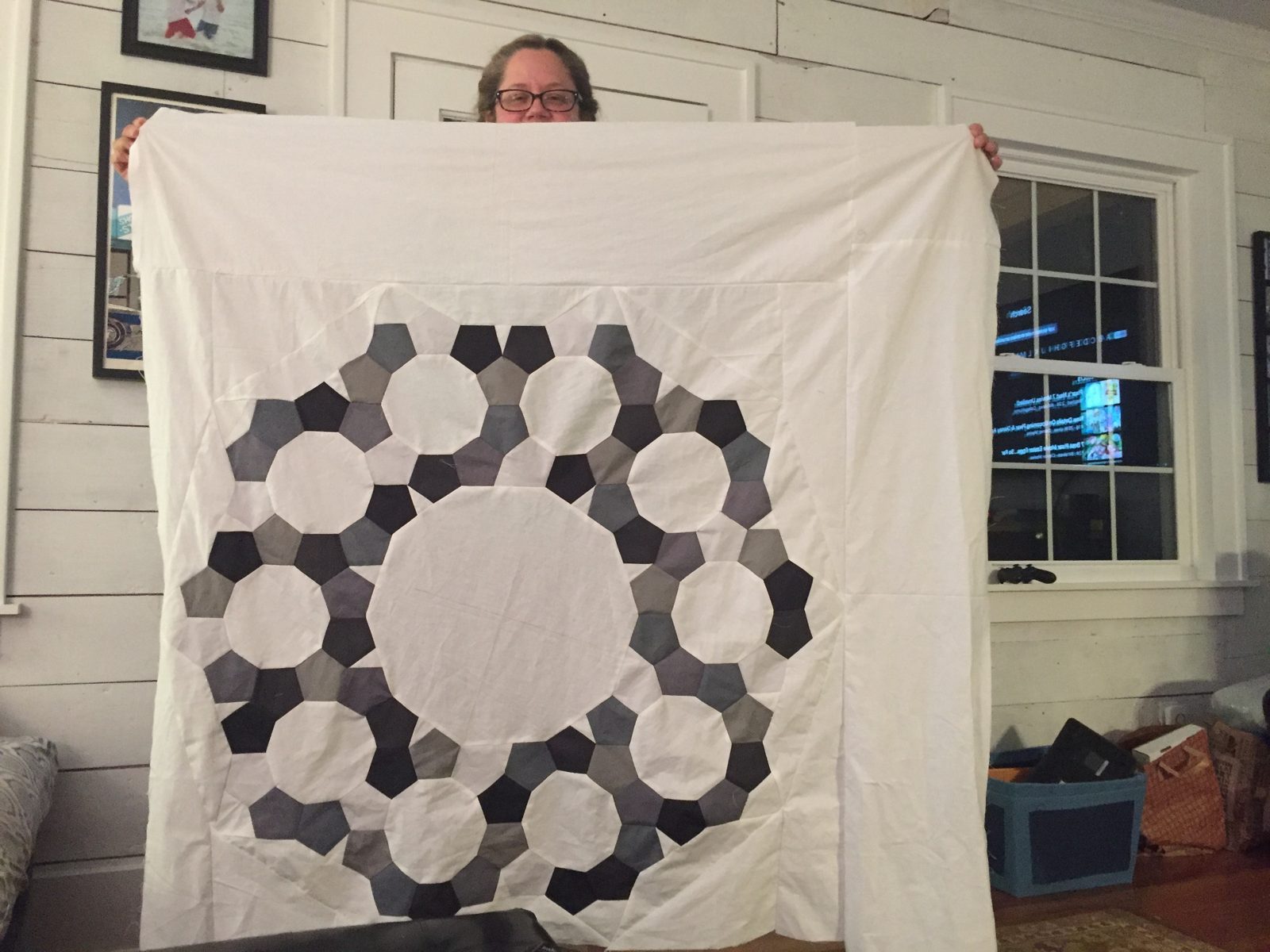
The back illustrates how a regular pentagon does not tile the plane.
Making it
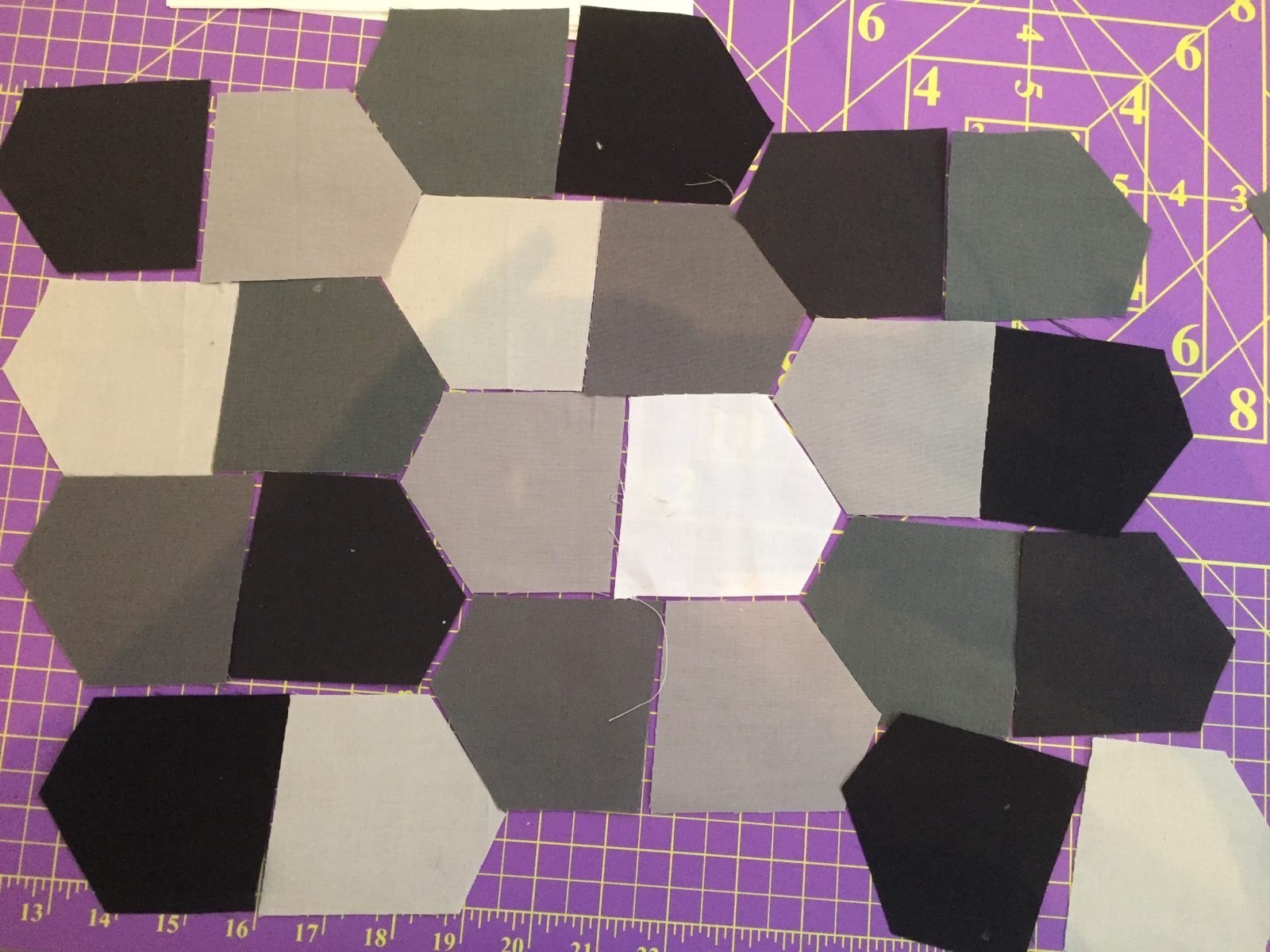
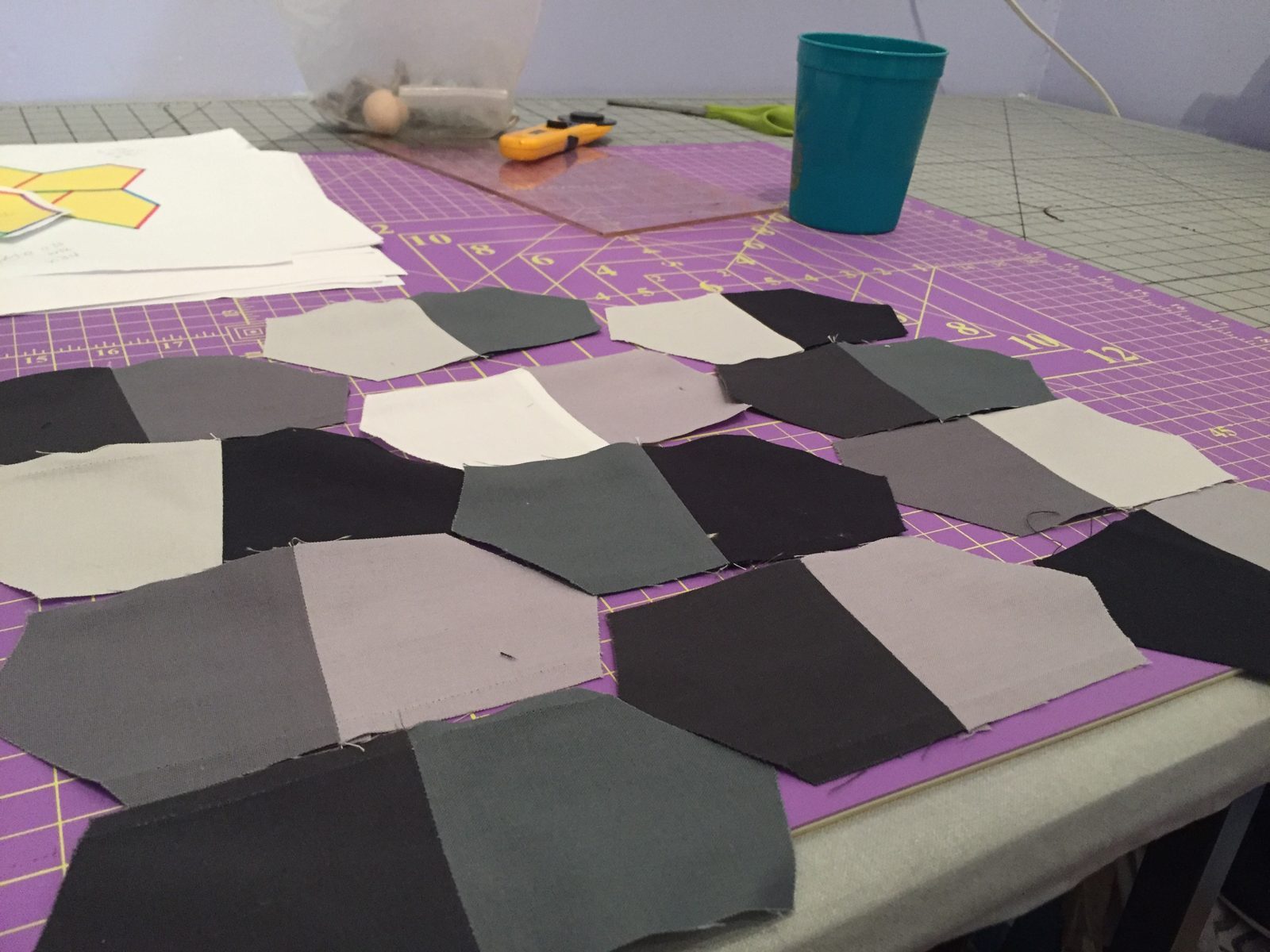
It's a king-size quilt.
Sources: Quanta Magazine, Wikipedia: Pentagonal tiling.