· made in 2017
Koch Fractal
A queen-size quilt built from a shape whose edge is infinitely long.
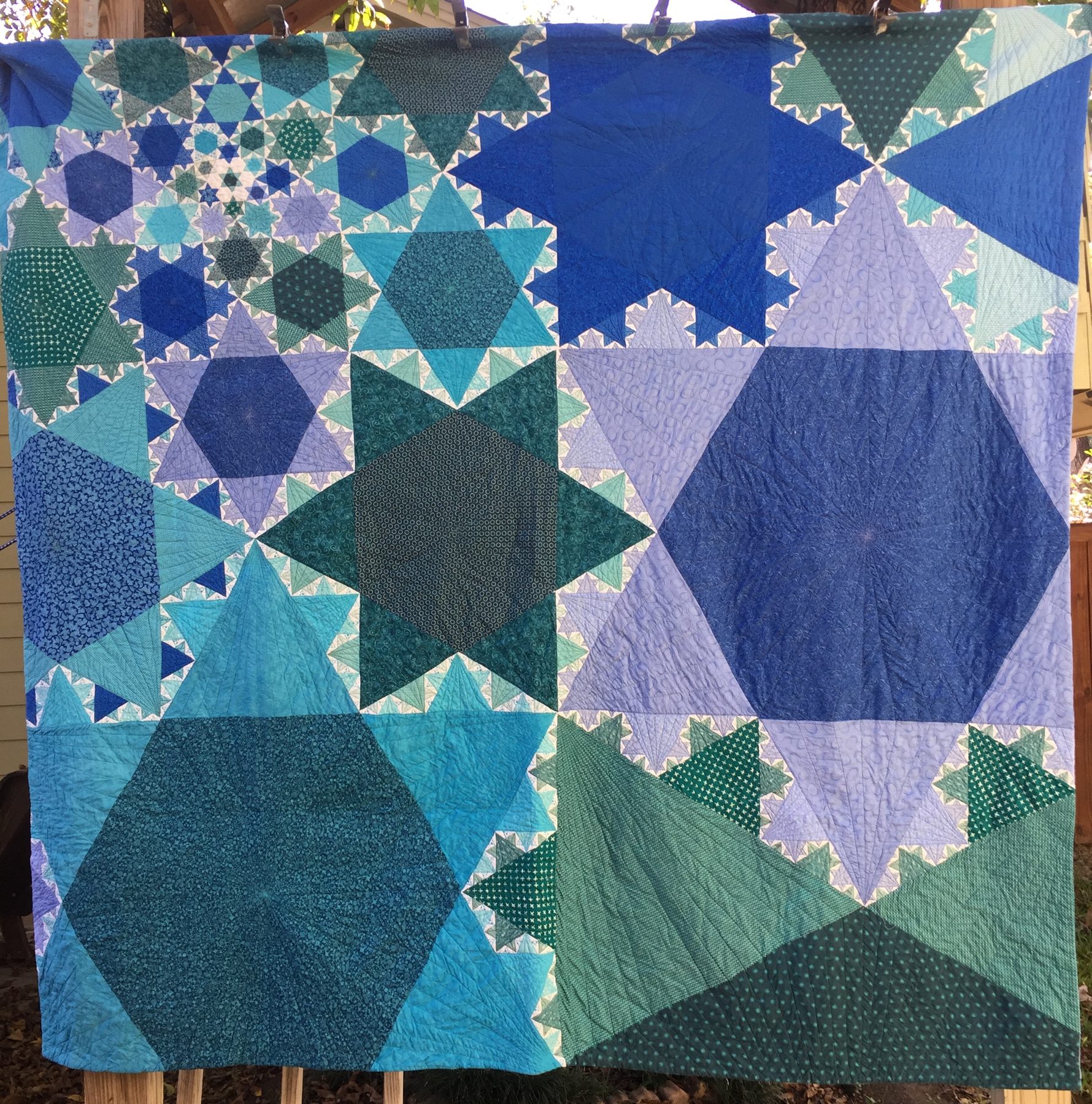
This is one I designed myself, with no existing pattern to follow. It's built from Koch snowflakes, one of the first fractals anyone described, and one of the easiest to draw.
The math
Start with a triangle. Take the middle third of every edge and add a smaller triangle there. That gives you a six-pointed star. Now do the same thing to every edge of the star, and then again, and again.
Every round makes the outline 4/3 as long as before, so if you kept going forever the edge would be infinitely long. But the snowflake never gets much bigger: it never covers more than 8/5 of the triangle you started with. An infinitely long edge around a finite area is the kind of thing that makes fractals fun.
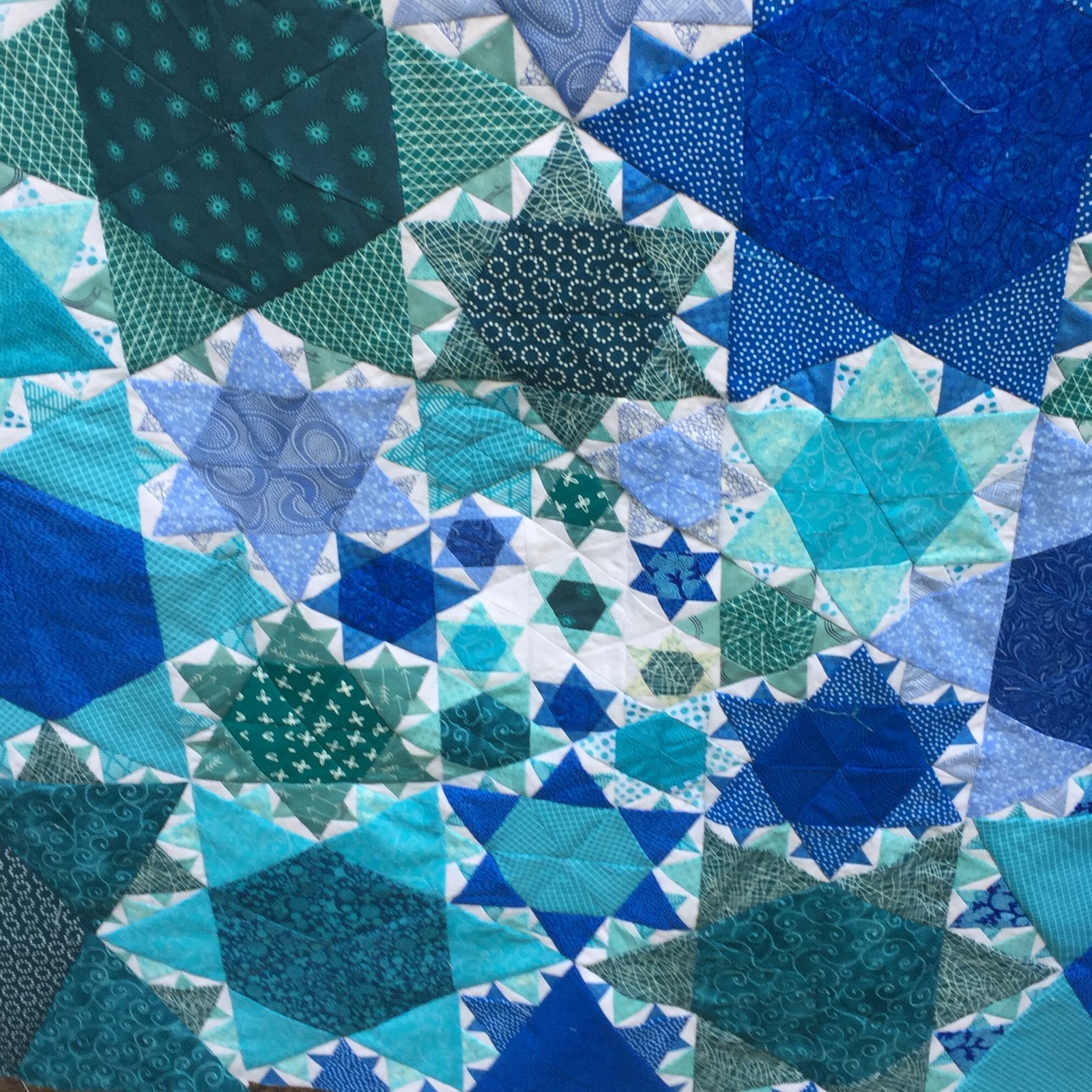
The part that matters for a quilt is that a Koch snowflake can be cut into smaller Koch snowflakes: one in the middle, turned and a little smaller, and six around it, each a third the size of the big one. Each of those can be cut up the same way, and so on.
That's where the stars inside stars come from. Each round is a third the size of the one before, so the triangles shrink fast: by the time I stopped, the smallest ones were about ¾ of an inch.
Designing it
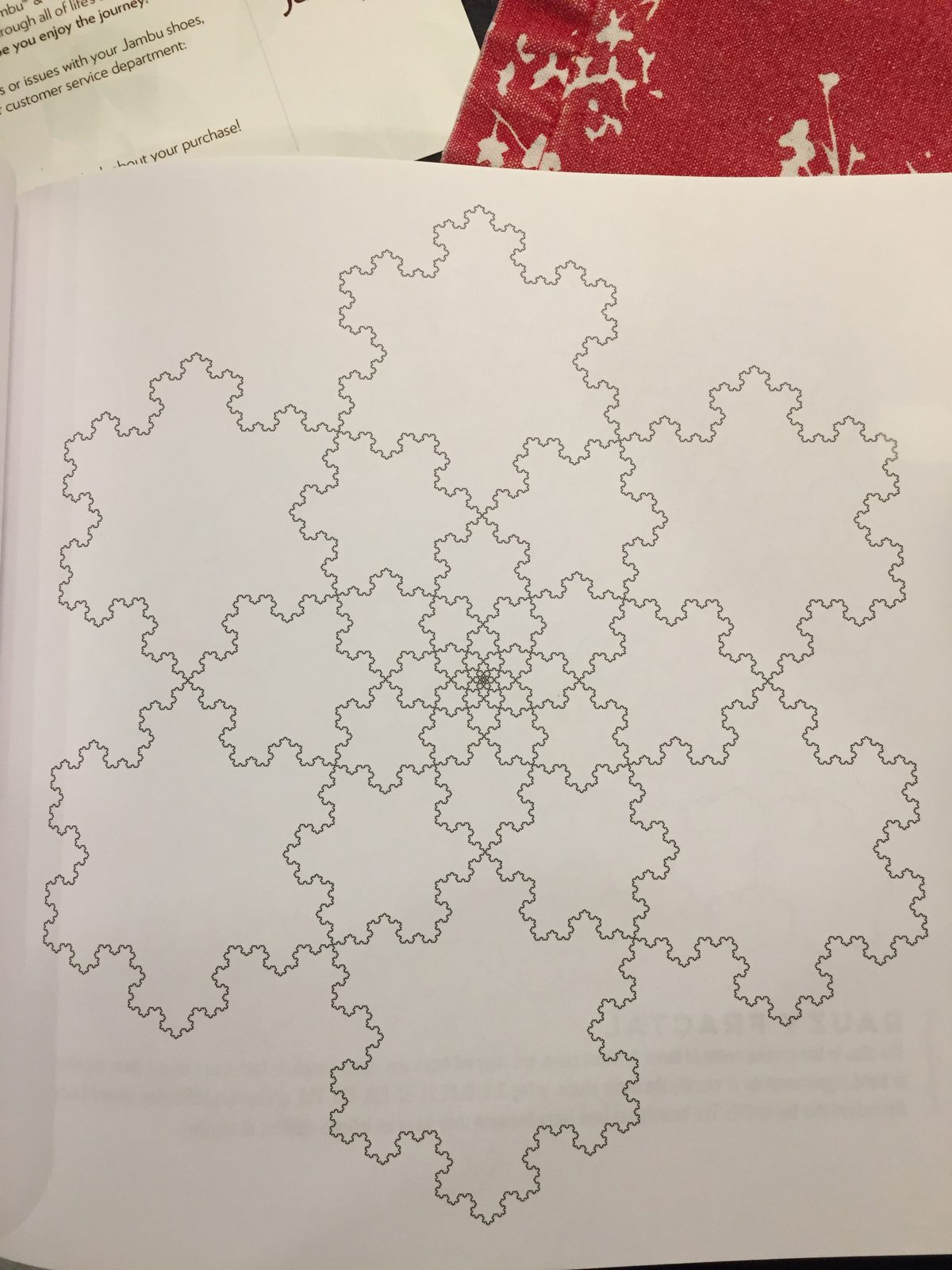
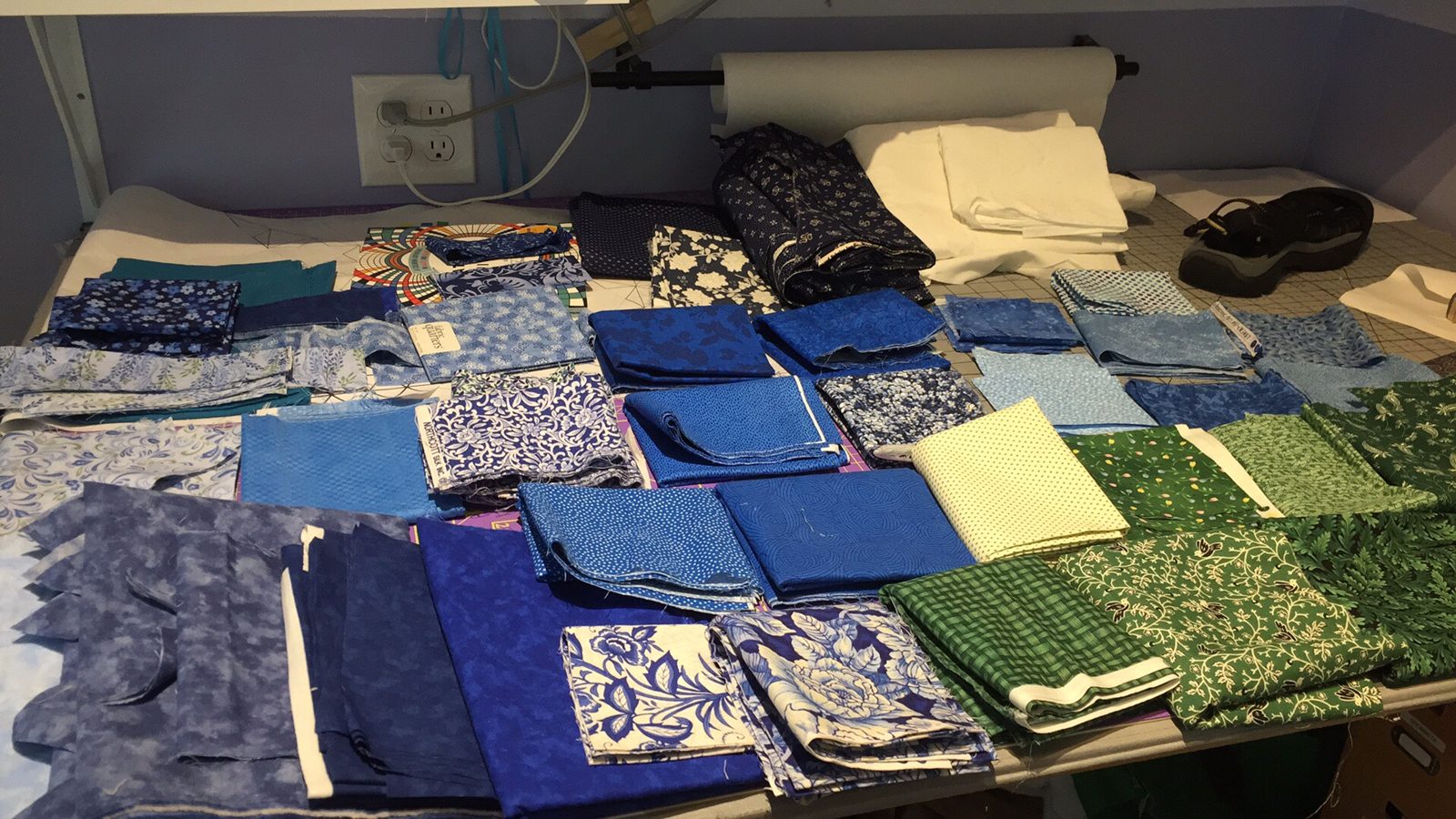
I chose a set of coordinating fabrics for each snowflake, so every one reads as its own shape, but they all go together.
Making it
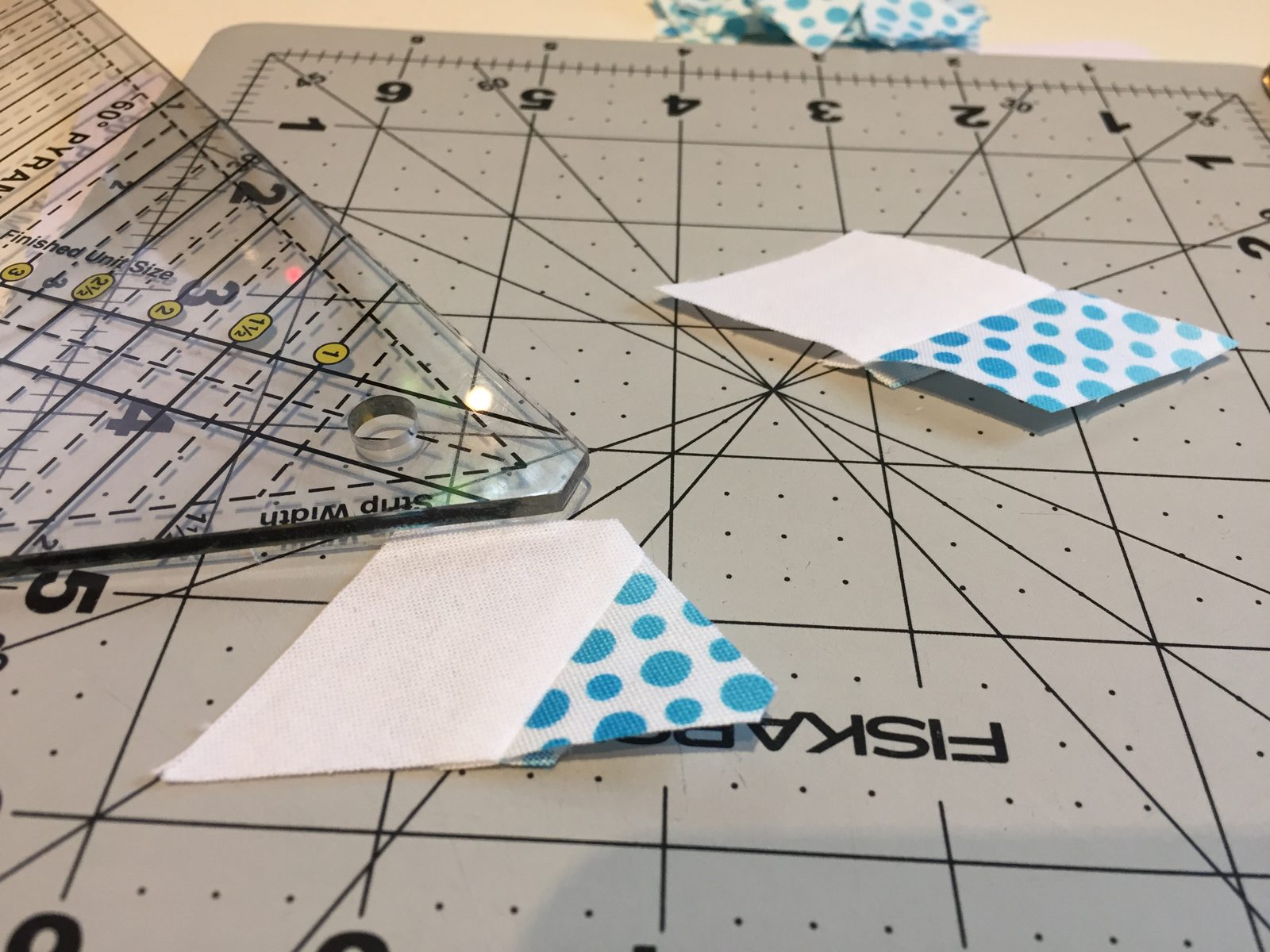
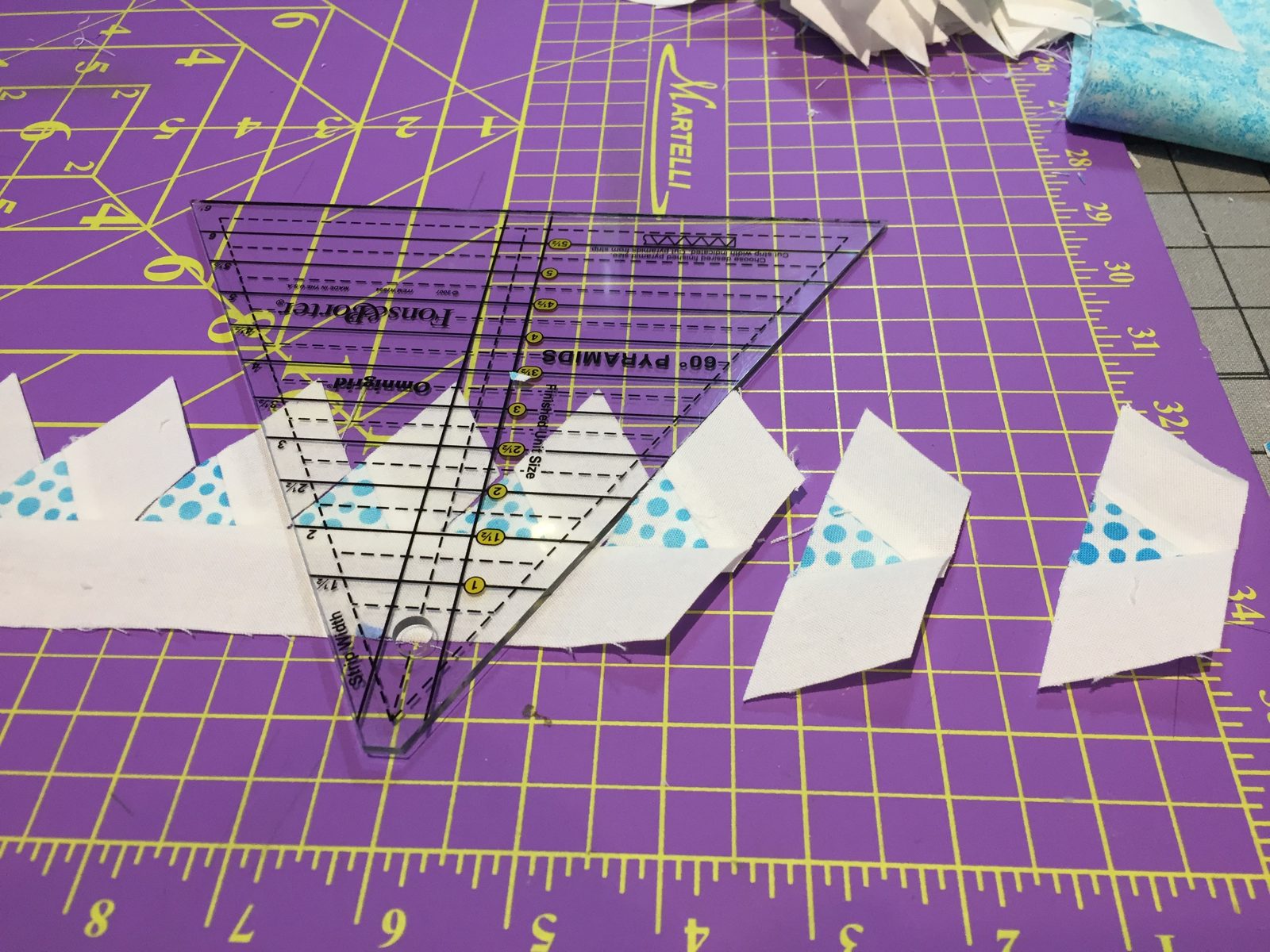
The hard part was the tiny points. With triangles that small, getting every point to line up takes a lot of care, and there are a lot of points.
Quilting
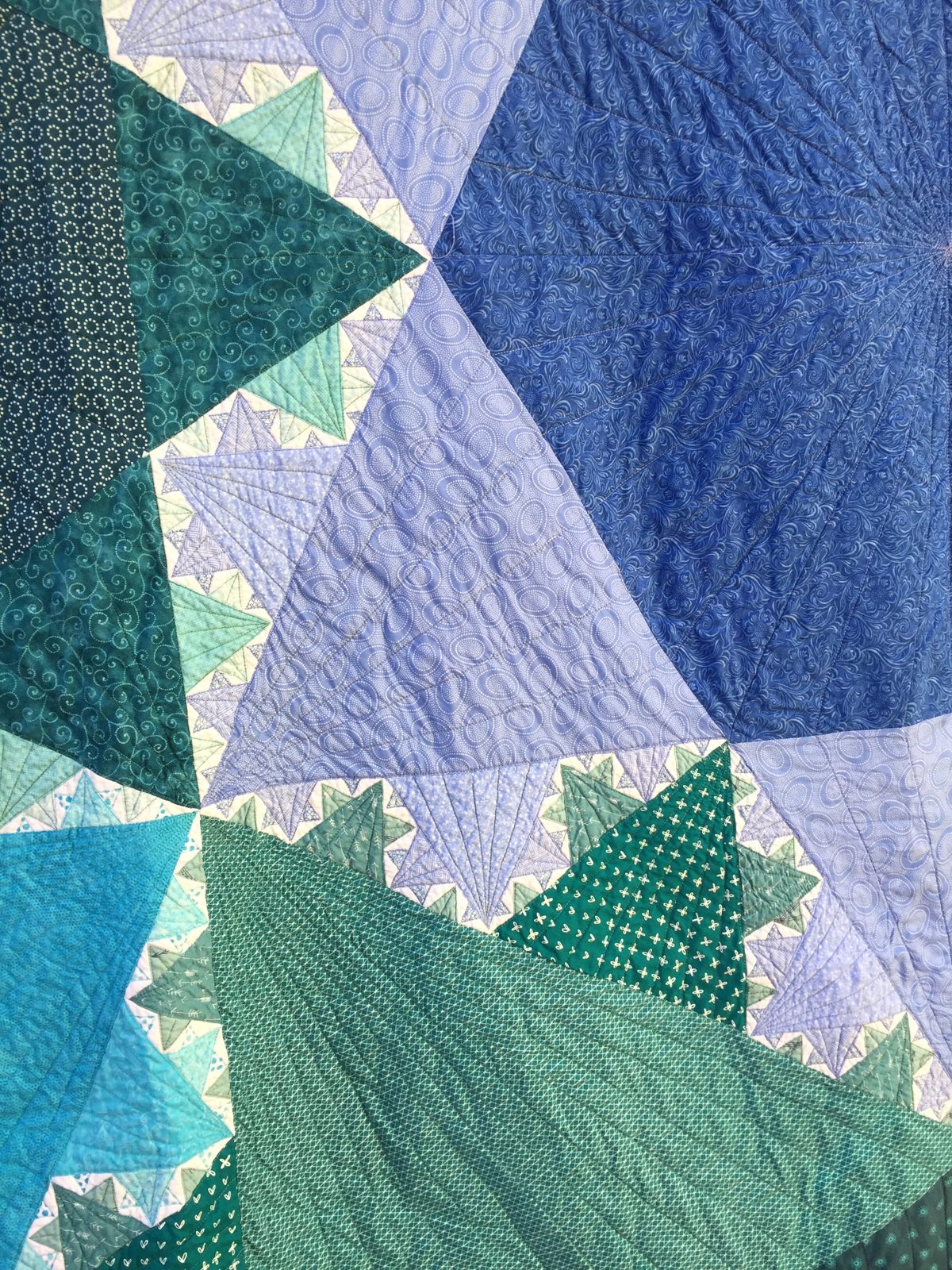
The quilting follows the lines of the triangles, with lines radiating from the point of each triangle out to its base.
Where it is now
It's a queen-size quilt, and it's on the bed in the guest bedroom.